
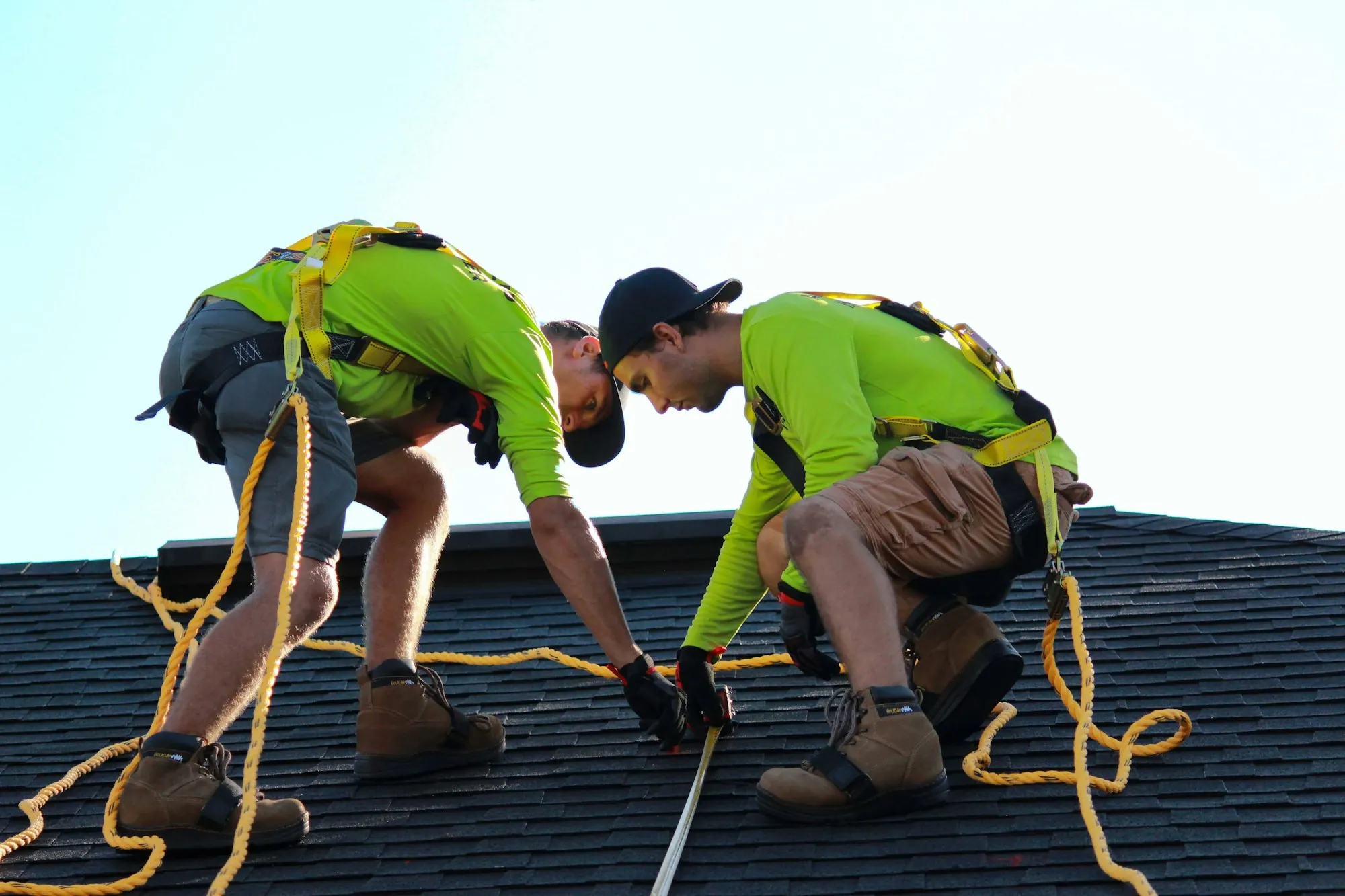
A solar array that looks idle on a roof is not idle. The moment daylight reaches the modules, they generate electricity, even if the inverter is off and the homeowner swears the system “isn’t doing anything.” For roofing crews in Palos Park and the surrounding southwest suburbs, that single fact changes how a reroof with solar should be bid, scheduled and staffed. This guide covers roofing around solar panels from the roofer’s side of the job: what is dangerous, what is regulated, and what keeps the schedule from slipping.
Key Takeaways
- Solar modules produce voltage whenever light hits them, so an array on a roof should be treated as energized until a qualified crew has shut it down and removed it.
- OSHA lists arc flash, electric shock, falls and thermal burns among the hazards solar workers face.
- In Illinois, entities that install distributed generation facilities must be certified by the Illinois Commerce Commission, with an exception for self-installers.
- The Village of Palos Park requires permits for the installation and maintenance of photovoltaic systems, separate from any roofing permit.
- The detach should be finished before tear-off starts, and the reset goes onto new mounts and flashing set into the new roof.
1. Treat the array as live until it is off the roof
Roofers should assume every solar module on a job is energized, because sunlight alone makes it produce power. The National Roofing Contractors Association said it plainly in Professional Roofing: once a PV module is exposed to sunlight, it generates electricity that can pose a shock and electrocution hazard. Turning off a breaker or the inverter does not stop the modules themselves from making voltage.
The federal government frames the risk the same way. OSHA’s solar energy hazards page lists arc flashes, electric shock, falls and thermal burns among the serious hazards workers in the solar industry can face. For a roofing crew, that means no one pries at rails, cuts conduit or steps on modules to reach a ridge. The array stays untouched until the solar crew has shut it down and taken it off.
2. Moving the panels is electrical work, not roofing work
Detaching an array is an electrical job first and a mechanical job second. Before a single module comes off, the system has to be shut down in the right order, the wiring disconnected and the conductors made safe. After the new roof is down, the same system has to be reconnected, tested and confirmed producing.
Illinois treats installing these systems as its own regulated trade. Under the Illinois Administrative Code, Section 468.30 says that, with the exception of self-installers, all entities that install distributed generation facilities must be certified by the Illinois Commerce Commission before installing any in the state. A roofing company that has never held that certification should think hard before putting its own crew on the reset. Ask the solar crew you bring in how they handle it, and confirm with the ICC how the rule applies to a specific job.
3. Pull the solar permit question into the bid
Palos Park handles solar paperwork separately from roofing, and that belongs in your planning from the first site visit. On its Solar in Palos Park page, the village states that permits are required for the installation and maintenance of photovoltaic solar systems, and it posts a solar building permit application, a contractor registration application and inspection procedures for those projects.
That does not mean every reroof with solar triggers the same filings. It does mean someone needs to ask the building department what the reset requires before the job is scheduled, not after the panels are sitting in a garage. Neighboring villages such as Palos Hills, Palos Heights, Orland Park and Worth each run their own building departments, so the answer you got on one street may not carry over to the next town.
4. Schedule the detach ahead of tear-off, and the reset behind your install
The cleanest sequence puts the solar detach on the calendar before your tear-off and the reset after your crew finishes. Your crew should arrive to a deck with no modules, rails, clamps or conduit left on it. Working around a partial array slows the tear-off and exposes your people to equipment they should not be touching.
Build in a margin on both ends. Weather in Cook County moves roofing dates constantly, and a solar crew needs to know when the deck will actually be clear and when the last course will actually be down. Keep one person on each side responsible for passing along changes. The homeowner will judge the whole project by how long the panels sat off the roof, and they will not care which company caused the gap.
5. Plan the new roof around the mounts that will go back in
New mounts should go into the new roof, and that is something roofers can make easier or harder. When the array is reset, the old attachment points are gone with the old shingles. The solar crew sets new attachments into the framing and flashes each one into the shingle courses you just laid.
Share the details that affect that work. Tell the solar crew which shingle line you are installing and its exposure, and flag any rafter or sheathing repairs made under the array area. If the homeowner kept a layout drawing or photos from before the detach, pass them along. The better both crews understand where mounts will land, the fewer surprises at reset and the less chance of a penetration that does not line up cleanly with the courses.
6. Protect the deck where the array sat
The section of deck under an array is the one part of the roof nobody will see again for a long time, so it deserves the closest look during tear-off. Panels shade that area and trap leaves and debris along their edges, and homes on wooded lots collect plenty of both. Soft or stained sheathing under the array should be replaced while it is exposed, because once the modules return, getting to it means taking the system off again.
Document what you find with photos. If the job is part of an insurance claim, those photos and a clear scope help the homeowner and the adjuster see what was replaced and why.
7. Keep the insurance and contract paperwork with the homeowner
When a reroof is tied to a claim, the solar detach and reset usually shows up as its own line in the scope. The homeowner controls that claim. What a roofer and solar crew can provide is claim-ready documentation and an itemized detach and reset scope the homeowner can share with the adjuster. Coverage depends on the policy and the adjuster’s review, so no one on the job should promise what the insurer will pay.
The same goes for leased or financed systems. Some homeowners do not own their panels outright, and their agreement may set rules about who can remove and reinstall the equipment. Tell the homeowner to check with the lease company or system owner before the detach is booked.
Where the Solar Work Fits in Your Next Bid
The practical move is to treat the solar as a subcontracted scope you price and schedule before you sign the roofing contract, not a problem you solve once the crew is on the roof. Get a per-panel number for the detach and reset, ask the village what the reset requires, and set the dates so the deck is clear when tear-off starts. That keeps your crew away from live equipment and keeps your schedule your own.
If you want that scope handled by a crew that works around roofing timelines, our detach and reset for roofing contractors is set up for it, and Solar Panel Removal Palos Park can explain how it fits your next job. Homeowners can read about the residential detach and reset process or start from our home page.